

So You Want to Read for Free?
Mar 22, 2026


Literary journal of the Northern Writers Forum.




“We are seated in countries forced to be countries. Countries made through violence.”
—Rosebell Kagumire (Feminist Writer & Editor)
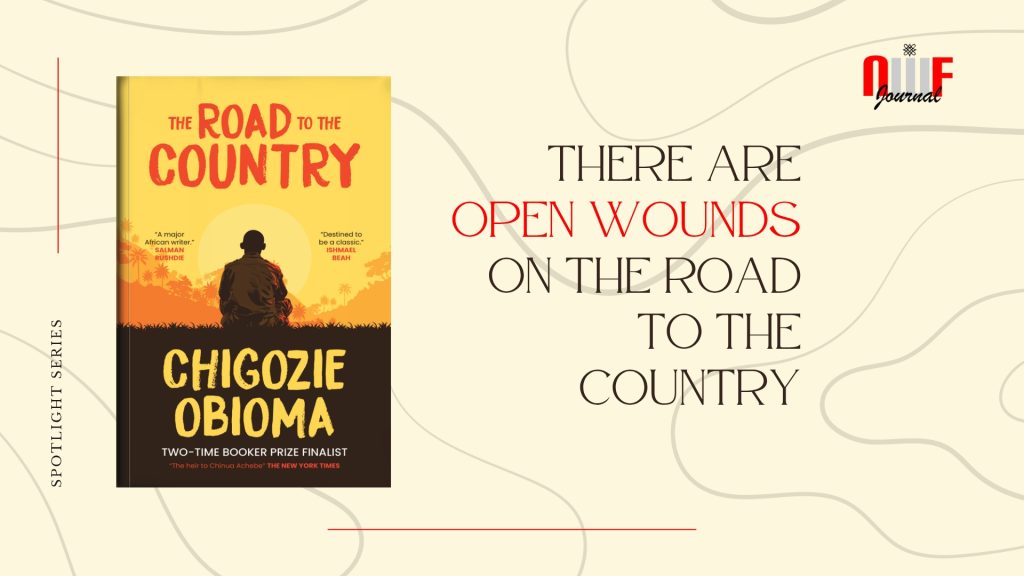
I spent the last few weeks combing through the pages of Chigozie Obioma’s The Road to the Country (TRTTC). For the most part, I was spellbound by the pages that held the sights of Igbala, the seer. They left me with a thought: suppose we could go back in time and undo the fabric that created the civil war; would Nigeria taste like unity?
Reading TRTTC took me back to 2023, to a time when I was possessed by an urgency to hear northern perspectives about this war I had grown up hearing so much about. Do not ask me why I was desperate; that story is for another day. What you need to know is that I sought and found people who lived at the time, people who remembered what it meant to go through the war. I tried to talk to Nigerian soldiers, but they wouldn’t speak to me. I however met with and spoke to a total of nineteen people. They all told a similar version of the story: hearing the war on the radio or experiencing it via a small curfew. They remembered the cutback on the national budget to fatten the defense arm of Nigeria and other things that suggested the war did not take much from civilians in the North.
Except for three men. Let’s call them Mr. X, Mr. Y, and Mr. Z.
Mr. X was one of those children born to a southern mother and a northern father. The family lived in the east when Biafra sought to name itself. He was a shy teenager when he was conscripted into the war. A Hausa-speaking northerner, fighting, starving in a circumstance he should not have been in. As I sat with him on a rainy evening, listening to his account, I felt the anguish rise from his words, settle on his face briefly, before wrapping its arms around all of us in the room.
The war took.
As he spoke, even I was overcome with guilt. I wished he did not have to relive the nightmares, wished the war had never happened. His children, grown and spread around him as they listened to him for the umpteenth time, carried the acrimony he carried, some sort of distrust in the unity of the country. Was the war worth it?
And then there was Mr. Y, the son of one of the officials conscripted into a special task force. Mr. Y’s father and his team were charged with collating and documenting the details of all shops owned by Southerners in Kano. This happened after, fearing for their lives and having watched their kinsmen being killed, assaulted, and maimed, Southerners fled the North. These officials were to take stock of who owned the shops, what they sold, and how much what they left behind was worth. Mr. Y claims that accounts were opened in the names of the Southerners and the money realized from the sales of their wares was kept there. He claimed that those who returned after the civil war were given access to the accounts.
While Mr. Y empathized and wished the war away, he felt the Federal Government did what was necessary to keep the country together.
Mr. Z, an Igala man, remembered the Biafran soldiers as not quite innocent. He recalled that they had suddenly found themselves in a war they did not want and were forced to swear allegiance to the Biafran forces or die. He remembered that his tribesmen were forced to carry arms, his tribeswomen raped, and towns invaded. For him and some people on the fringes of Biafra, the Biafran forces were the oppressors.
The war took.
At the end of the war in January 1970, the country adopted a “no victor, no vanquished” slogan, culled from the speech of the country’s leader, Gen. Yakubu Gowon, urging the whole country to forget. No one has forgotten. And in fact, many decades later, the dreams of unity Gowon envisioned have become garri soaked in the waters of distrust, fetched from the wells of memory of this war, this genocide. It swells and swells and we eat and eat. But it doesn’t finish.
The war happened. It took. And like many books before it, TRTTC forces us to remember, to empathize, to once again witness what happened.
In the course of the interviews I conducted, I got a sense that some people felt a tinge of guilt and empathy for the atrocities committed on Southern soil, but they also carried with them some conviction that it was necessary, inevitable even, to keep the country whole.
I started this column drawing from the words of feminist writer and editor Rosebell Kagumire, who, in a webinar discussing the colonial legacies of leadership in Africa, argued that countries in Africa never sat down to decide that they were countries. Instead, they were forced by colonial masters to conform to borders and band together. A forced marriage. A bad, forced marriage.
The amalgamation of the northern and southern protectorates has not truly given birth to a national dream. What we have is a history of hurt and anger, passed down through generations, such that we remember to dishonor each other, and to approach each other with caution.
One of my takeaways from Kagumire’s argument was the need for us, as a collective, to reimagine our communities and dreams for the future. This led me to ask: what is the Nigerian Dream?
Unlike Igbala, I do not claim to see the future. I do not know the way to unite us. I do not know what our collective Nigerian dream is. But my dream for Nigeria is healing. Whether this comes in the form of reconciliation or separation, I do not know.
What I do know is this: the war happened. And the North is like the man in a marriage who is oblivious to its failings. The South is the wife who is tired and wants out. The Middle Belt are the children caught in the crossfire.
The North must now learn to empathize and approach the table with a little more than wishing the past away. And maybe, just maybe, if the South wants to leave, we can find a way for them to leave peacefully? Restructure? I don’t know.
But to start, can we try to heal?