

So You Want to Read for Free?
Mar 22, 2026


Literary journal of the Northern Writers Forum.





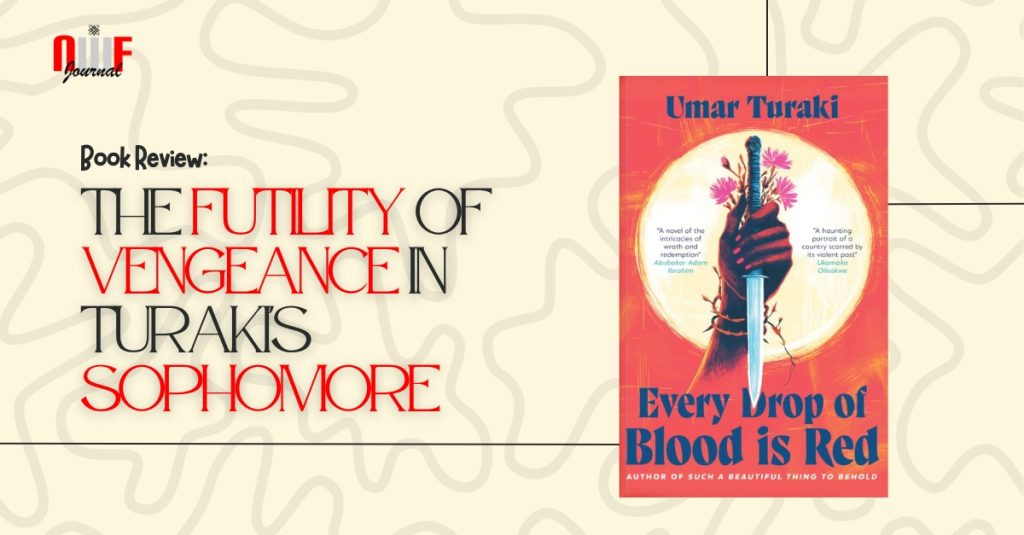
“Jos during the rainy season”, opens Umar Turaki’s Every Drop of Blood is Red, “is mischievous and merciless”. On a rainy and cold Friday dusk in the city, a strange girl with a peculiar Hausa name, Murmula, enters the compound of Mr Pamson, drenched by the rain, her clothes plastered to her body, with a strange request: she wants to enrol as an apprentice in his mechanic workshop. While Turaki vividly paints Jos with deliberate, evocative prose, this story’s true mischief and mercilessness belong not to the rain-lashed city, but to its people.
Thrilled by his debut, Such a Beautiful Thing To Behold, a book where I learned the Ngas words for food (mun), soup (puk), and became a hostage to the whims of Turaki’s artistic mastery, is where I knew I would read everything written by him.
Every Drop of Blood is Red is an inquiry into, to quote Abubakar Adam Ibrahim, “the intricacies of wrath and redemption.” It is an attempt to unpack the shards of peace broken by a quest for retribution. Since vengeance has been the oxygen sustaining the conflict in Jos, Turaki asks what comes next after revenge in this novel. Fulfillment? And at what cost? His passionate appeal for peace and unity in this book lies in his ability to unite Murmula, the protagonist, and Mr Pamson, the antagonist in the same situation of seeking atonement in the end. Though the latter asks God for comeuppance and works towards it because, for him, the future is nothing but a doom as Turaki writes, “each flower that bloomed was a promise of death unfurling. Each triumph of love was a tragedy-in-waiting.”
Murmula’s request on that rainy dusk was rejected, but she didn’t walk into the compound in vain. Affection grew between her and Paul, the younger cousin of Rahila, Pamson’s wife and she would use him to get closer to the family and eventually get to work directly with Pamson to execute her clandestine plan that she hid under the guise of love for cars which birthed the desire to become a mechanic in her.
Murmula now fully lives a life of telling endless lies. At home, she will lie to her uncle and aunt about the work she goes to and to the Pamsons, she seeks vengeance under the pretense of passion for fixing cars. Mr Pamson killed her father in one of the conflicts a decade earlier and usurped their land, where he now lived. So she assumed.
Turaki explores other themes in this book, like confronting the culture of low expectations. Impressed by her communication skills, Paul tells Murmula “your English is so good,” and she retorts, “you forgot to add ‘for a Hausa girl.’” Jos is a city of catering and car mechanics. Turaki pays tribute to the two trades. He examines how business packaging is sending more fortune into the way of caterers than car repairers, citing the observation that mechanics behave like labourers and not service providers as the major reason behind the disparity in what the two traders earn.
Murmula’s cousin, Mustapaha, smokes weed, drops out of school, and has little interest in figuring out his future. His selfish desire towards her makes him spy on her. He discovers her lies but shamelessly demands sex in return for his silence. She explains her mission to him to avenge the killing of her dad, his uncle, and he gives her a knife and encourages her to stab Mr Pamson with it. By this time, Paul has secured a role for her in the rebranded garage of Mr Pamson.
She realises she isn’t made for violence and opts for poisoning his food. An innocent boy eats it. She desperately summons Paul to take the child to the hospital and absconds while efforts to resuscitate the child are going on. This development makes her question the essence of her revenge mission and regrets embarking on it. She ignores Paul’s messages and calls. Amid this drama, Turaki ends the first part of the novel and switches from realism to speculation, the genre of his first novel.
There seems to be a case for degree over skills in this novel. Mr Pamson’s wife, Rahila, with her degree, secures a job in the development space where she earns far more money than her mechanic husband. Her newfound fortune makes him insecure. He misses the version of her that relies on him financially. He now cheats. Rahila caught him pants down sexting with another woman, discussing what they did, and plan to do next through his WhatsApp. Saving his marriage becomes the new battle he faces.
Pamson’s friends during his days of political thuggery and assassinations have now become the political leaders in the state. He had broken away from the dirty life and resigned to the fate of being a mechanic in search of atonement. He now reunites with one of his old friends, who sees his business as a convenient vehicle to loot public funds.
Amidst so many unresolved conflicts: the fate of love between Paul (a Christian) and Murmula (a Muslim), Murmula’s ordeal of poisoning an innocent kid, her trepidation of Paul finding out her mission in their home, Pamson plans to allow his company as a vehicle of looting public funds and many others, Turaki decides to turn to the saying that “we are nothing but pencil in the hands of the creator”.
The world suddenly wakes up to a case of people disappearing without a trace. Christians say it is rapture and Muslims blame it on Djinns. With Paul and Rahila among those who disappear permanently. In the end, Murmula realises Pamson has killed in the past, but certainly not her father. In a fresh twist, they have now joined forces to pursue the killers of Murmula’s father and the grabbers of his land during the 2008 crisis in Jos.
Like Abubakar Adam Ibrahim’s Season of Crimson Blossoms, this book is a valuable addition to the conversation on the conflict in Jos and Plateau state. A place Turaki describes as “much more difficult to tell Muslims and non-Muslims apart.”Turaki’s prose glides. Every line is effortlessly poetic. Whenever his unknown narrator makes way for dialogue involving unsophisticated characters, it feels like interrupting a great moment of relish.