

So You Want to Read for Free?
Mar 22, 2026


Literary journal of the Northern Writers Forum.




2021 has been described as the triumphant year of African literature. The success story began in June when Senegalese author, David Diop, won the International Booker Prize for his novel, At Night All Blood is Black. The International Booker is awarded annually to books of fiction translated into English. Later that year, African authors claimed both the international and main Booker when South African writer, Damon Galgut, won the prize in November for his novel, The Promise.
Tanzanian author, Abdulrazak Gurnah, was crowned the Nobel laureate in literature of the same year. Mozambican author, Paulina Chiziane, won the Camões, the most prestigious prize in Lusaphone literature. Culminating this extraordinary year, Senegalese author, Mohamed Mbougar Sarr, at the age of 31, became the first black writer to clinch the Goncourt, the most esteemed literary award in Francophone literature for his masterpiece, La plus des secrète mémoire des hommes (The Most Secret Memory of Men).

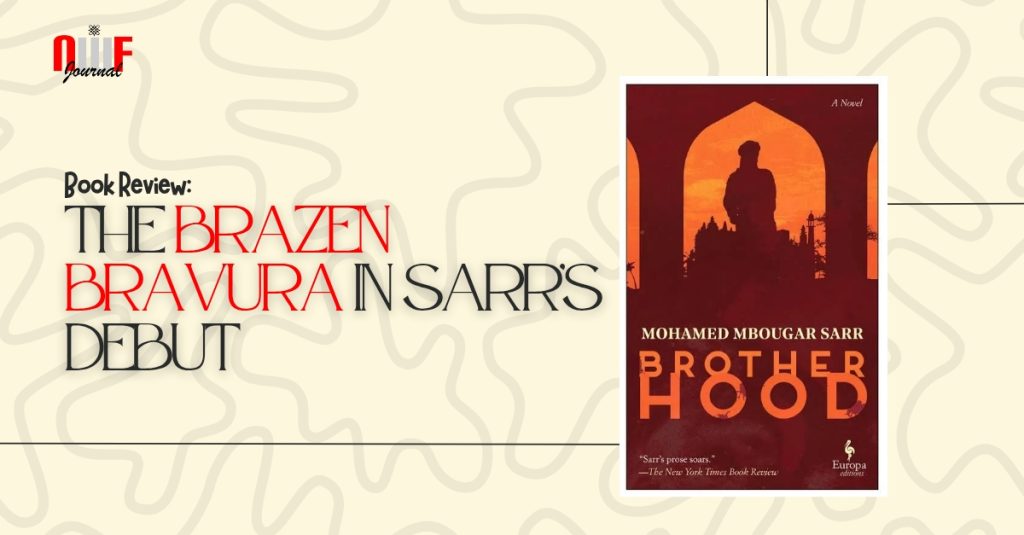
For the significant milestone attained with such a young age, I took an immediate interest in Sarr. He was introduced to English readers 28 days prior to his success at the Goncourt through the translation of his debut novel, Brotherhood. And as one of the largesse of the award, the demands for Sarr’s works rose exponentially.
Last year, I read The Most Secret Memory of Men and instantly became his fan. The book embodied some of the traits that I passionately admire in some great Francophone authors; the wit of Alain Mabanckou, David Diop’s penchant for exploration of African history and colonialism, and the words in the book sang like the prose of Maryse Condé.
Described as “a love song to literature”, the novel is an allegory of the life of Yambo Ouologuem, the late Malian writer whose glittering writing career was cut short by accusations of plagiarism from the English writer Graham Greene. Ouologuem’s disappearance from the writing world has been described as “a great loss to literature”.
There’s a palatable nectar in Sarr’s prose– the dialogue is often philosophical and the stories are exuberant. It’s an irresistible combination of traits that led me to his other book, Brotherhood, and I met the same Sarr, the same style, voice, and technique. He’s just 3 months shy of turning 35, and with four critically acclaimed and award-winning novels, this is perhaps too early to announce, but I feel MMS is on course to become the greatest African millennial writer.
Brotherhood is a reflection on extremist Islamism in a fictional West African country of Sumal. The book opens with a public execution of young lovers, Lamine, 20, and Aïda, 19 in the city of Kalep who are accused of an immoral relationship. You know you’re really dealing with illiterate extremists when people are killed for fornication. You ask yourself how they managed to prove the immorality with such Islamic stringent conditions in place for witnesses to prove such a case. Bereaved mothers of the executed lovers, living in separate cities– Kalep and Bantika– of Bandiani province of the country, exchange compelling letters that keep readers engrossed and conveniently advance the plot.
Apart from the letters, there are three passages in Brotherhood that strike me with great fascination; the introduction of Nder Joor Camara and her culinary genius in chapter 3. By her “skilled hand”, Sarr writes “Sumalese cooking became gastronomy”; Père Badji in chapter 6 and his tavern, whose cherry ambiance is filled with bursts of laughter and joyous roars, but owned and managed by a misanthrope; and Abdel Karim and the ecstasy he derives from reading the Qur’an in chapter 23. Those passages are crafted with vivid imagery and brazen bravura of a writing dervish, too good for a debutant in his twenties. It is not by accident that Sarr clinched the Goncourt just six years into his career as a novelist.
The occupation of Kalep by the extremists meets resistance for the first time from the people when Nder Joor goes out in a panicked state looking for her child and forgets to put on her headscarf. The Islamic police flogs her and call her immoral names like “bitch” and “tramp”. The people couldn’t tolerate the public humiliation of such a gracious woman and decide to mob the police to rescue her. Later, the commander of the police would amputate the hands of his three men that participated in the merciless beating of Nder Joor. A brutality that suggests even the ‘brothers’ are not safe from the violent claws of the brotherhood.
Malamine, a medical doctor and the husband of Nder Joor, would later reach out to his network of educated friends to wage an intellectual war against the brotherhood. They agree to launch the war through a clandestine journal that is strategically placed in public places urging the people to revolt against the tyrannical regime of the extremists. The contents of the journal unsettled the extremists, with Abdel Karim even admitting that the arguments– citing authorities from Qur’an and hadiths– cast doubt on his faith but had to seek refuge from Allah against the deception of the devil. This part of the book captures the ignorance of extremists all over the world and their allergy towards moderate religious practice. In Nigeria, Boko Haram has assassinated vocal clergymen who spoke against their extremist ways. The victims include Sheikh Ja’afar Mahmud Adam, Sheikh Ibrahim Gomari and Sheikh Albani Zaria. Clergies like Sheikh Ibrahim Pantami and Sheikh Idris Dutsen Tanshi (recently deceased) are some of the fortunate survivors of the peak period of the insurgency hale and hearty.
So, a manhunt for the publishers of the journal started. They used threats and lured people with money but to no avail. Abdel Karim did the unthinkable by razing down the gigantic library the Bandiani province was proud of, recognised as a world cultural and heritage site that housed ancient manuscripts and other important artefacts. Perhaps this is an allegory of the attacks on cultural and heritage sites in Mali in 2012 by terrorists. Though the fictional name of the country, Sumal, is closer to Somalia than Mali, it can also be a well crafted acronym to capture the violent extremism in both countries. Su for Somalia and Mal for Mali.
Abdel Karim achieved his aim. He knew the intellectuals would be riled by such action and might not be able to contain the anger of losing such a place that was the soul of the intellectual life in the province. Déthié and his wife, Codou fell into the trap. He caught them. But Père Badji would not have his comrades publicly executed without resistance. He went into the watching crowd with his rifle and killed two men from the twelve-man firing squad that were ready to execute them. This was followed by an uprising that killed and banished the extremists back into the deserts, something similar to the 2013 uprising of Civilian JTF and Maiduguri that forced Boko Haram into Sambisa.
Apart from the public beating of his wife to a pulp, Malamine has another score to settle with the extremists. He lost his first son to the alien Islamic ideology. Something that broke his heart and married him off to grief and insomnia. All efforts to get his teenage son back on track proved abortive. He disowned the child the day Nder Joor collapsed while trying to mediate peace between the son and the father. He asked the son to help him pick her up to her bedroom but he stood there saying he couldn’t because of his ignorance of the Islamic ruling on physical contact between son and mother, since men are not allowed to touch women.
The major weakness of this novel, in my opinion, resides in Sarr’s reluctance to delve into the core discrepancies between heretic extremists and the conventional Muslim world on subjects like sharia, democracy, geopolitics, and western education. I admire Elnathan John’s Born on a Tuesday because of its extensive discussion on the core differences between Shia, Sunni, and Tariqa. I feel Sarr should have expanded the scope of Brotherhood to cover the core areas that extremists are holding onto to pick up arms and fight. Nevertheless, this is a brilliant book.