

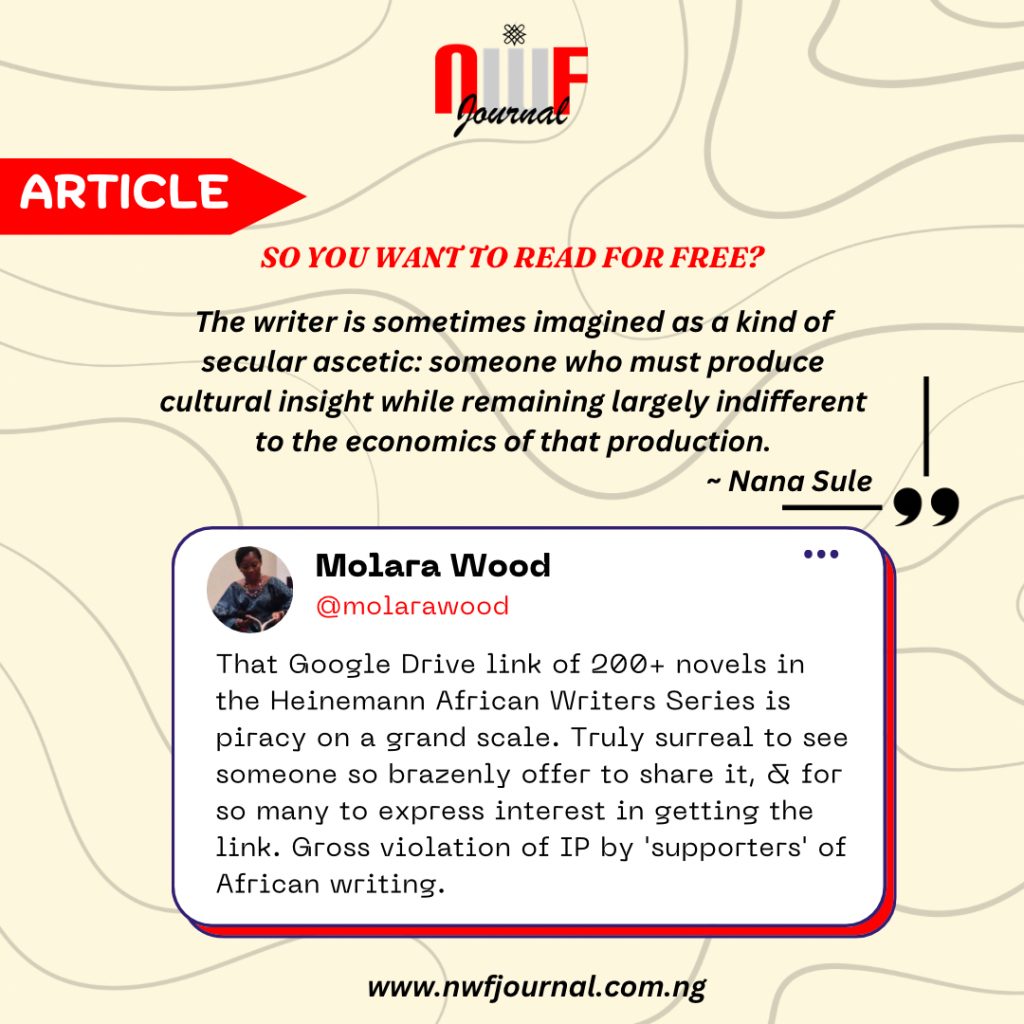
So You Want to Read for Free?
Mar 22, 2026

Literary journal of the Northern Writers Forum.




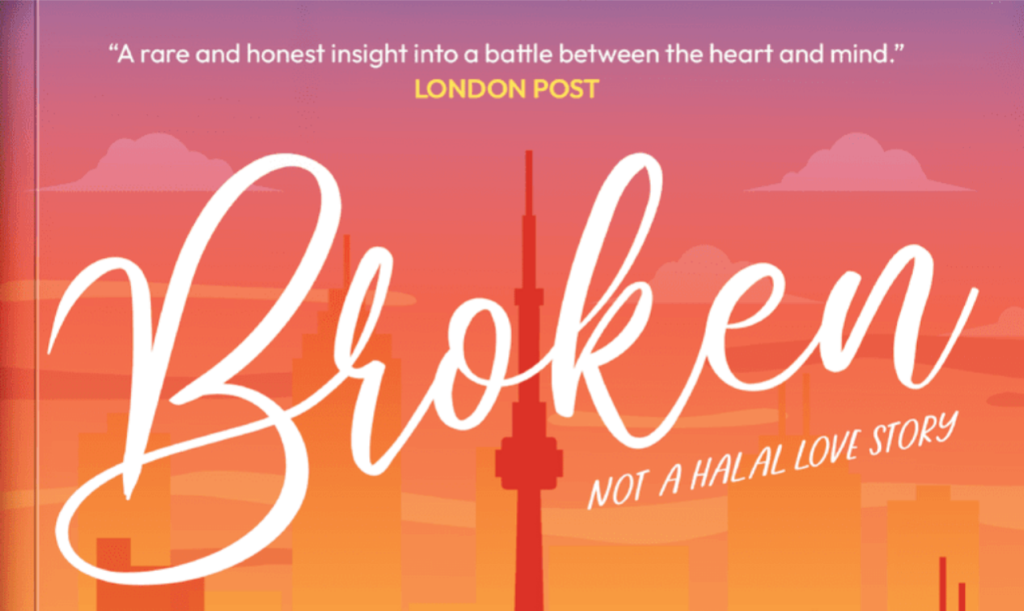
Whatever might be the shortcomings of Broken: Not a Halal Love Story, the book is a shining star in the comets of Nigerian literature, evident in the fact that it is a National Bestseller published by the reputable Masobe Books.
Fatima Bala’s Broken: Not a Halal Love Story is a break from the usual love stories and their inevitable destinations of loss. It is something quite similar to the love between Ifemelu and Obinze in Chimamanda Ngozi Adichie’s Americanah in terms of the fate of the love. The novel is an attempt to guide those with interest in the politics and intricacies of marriage in Northern Nigeria from cultural and Islamic prism among the elite class of the society.
Fatima says the book is an answer to Toni Morrison’s call on writers to write the book they want to read which has not been written. It is not by accident that the book is a National Bestseller. It comes with something really missing in the limelight as far as Nigerian literature is concerned. The story may be common, but the conversations on marriage and divorce in the light of two Islamic schools of law, Maliki and Hambali, is original. The last time I enjoyed deep Islamic conversations in a Nigerian novel was in Elnathan John’s Born on a Tuesday which features a conversation on the major discrepancy between Sunni and Shi’a.
Broken is a celebration of patience and perseverance, and the popular adage of light at the end of the tunnel. At the centre of the novel is Affaire de Coeur between Fa’iza, Fatima Bala’s narrator and Ahmad, the charismatic young tech entrepreneur. For Fa’iza, being a pious Muslim woman, the initial challenge is resisting the deep urge to be involved in physical intimacy with Ahmad who doesn’t care about the boundaries of Islam regarding it. Every touch, kiss or hug between them is usually accompanied by feelings of guilt from Fa’iza. Ahmad would respect this feeling and also restrict himself from touching her. In the end, he convinces her to have a secret marriage in Canada before their parents would be done with the preparations for the wedding in Nigeria to enable a physical intimacy between them without her feeling guilty.
The foundation of their love ends up being uprooted by the discovery that the same woman breastfed them, which makes marriage Islamically unlawful between them. This would mark the beginning of five years of trauma for Fa’iza, partly because of her involvement in physical intimacy with her ‘brother’ in the sight of Islamic law.
The character development of Ahmad is quite impressive. We see a hedonistic liberal shaped by love for a woman into a very decent man in the context of Islam and Hausa culture. For Fa’iza, I feel she ignores Hausa arts in her narration. She talks about western books, music, movies and paintings yet, says nothing regarding the arts of Northern Nigeria origin. No phrase is repeated as many times as “in our culture” in the book, and to my shock, the narrator never cares to mention arts of Hausa origin even when a perfect opportunity to present it shows up where a wedding is held in Milan in the book. I understand that the characters are children of the elite and may have a taste for foreign arts and entertainment, but Hausa musicians largely rely on such occasions in the houses of the elite to make money. So, not seeing Nazifi Asnanic or Ali Jita for example, performing in that wedding in Milan who were the reigning Hausa singers in the early 2010s feels like a squandered opportunity for this writer to give visibility to Hausa arts and entertainment.
Tourism thrives on storytelling. It is the perfect work of storytellers that conditions me to only think of shin and glamour whenever I hear the name America until the day I read Chimamanda Ngozi Adichie’s Americanah which shows the downside of the country. In Broken, recreational places in Canada enjoy visibility while Nigeria is left blank regarding that. I remember how Abubakar Adam Ibrahim’s “When We Were Fireflies” influenced me to visit Gidan Makama in Kano because of the visibility that he gave the museum in the book. Storytellers should be deliberate in taking their places to the fore.
The book is intense and the battle is relatable. Ahmad doesn’t care, but Fa’iza finds herself navigating through the boundaries of her faith imposed against the forces of love with their accompanying desire for intimacy. She wants to kiss, hug and even go all the way with Ahmad, but her religious upbringing, cultural and familial expectations are always there to restrain and remind her that such things are haram unless done under the umbrella of marital bliss. This is why I reject the “Not a Halal Love Story” tag on this story.
Fatima says she named the story so because it has imperfect Muslim characters. But it is clearly established in the Qur’an and Sunnah that humans are created imperfect in the first place. Qur’an 4:28 says “for man was created weak” and in the Jalalayn exegesis of the verse, it is explained that the weakness here is the difficulty to abstain from women and sexual passions.
Moreover, the Hadith says “every son of Adam is a sinner, and the best of sinners are those who repent”. Everyone is imperfect, giving a story that clearly indicates what is halal from haram a “not a halal” tag because the characters are imperfect is something I still try to make sense of.
This is a well written book, but sometimes the plot twists feel too good to be true. Zafar and Sabrin, Fa’iza and Ahmad all overcome the hurdles faced by their relationships to end up as happy couples, this is a common storyline in arts and literature of Hausa origin transported to the limelight of Nigerian literature. Happy endings are very important in appeasing the audience of Northern Nigeria. It is ironic that a people who don’t appreciate painful and torturous stories would make all sorts of excuses for oppressive leaders to a point of even seeing the adversity in the land as a kind of divinely ordained comeuppance for sinful ways of the people.
I’m still debating with my friends on the genre of the book on whether it is literary or airport fiction. I say it is a literary fiction because of its deep exploration of Fa’iza’s traumatic condition during the five years of her estrangement from Ahmad. Also, the language has literary nuances barring the insistence of the author to translate every italicised Hausa word to English.
The book also talks about the cultural bias against women in Hausa culture. We read where a relative of Fa’iza is asked to be patient and live with a husband that is alcoholic. The stance of Fa’iza’s mum on the issue questions what the outcome of the situation would be if the alcoholic is the wife and not the husband. Everyone would have asked him to leave her, but since it is from the husband, even the wife’s relatives are encouraging her to stay in the marriage. This is another exploration of the human condition in the book that makes it a literary fiction.
Whatever might be the shortcomings of Broken: Not a Halal Love Story, the book is a shining star in the comets of contemporary Nigerian literature, evident in the fact that it is a National Bestseller published by the reputable Masobe Books. It is scandalous that the book is missing in Brittle Paper’s 2024 list of 100 Notable African Books. Finally, a heir to Zaynab Alkali is born and looking at her wide network of readers, we can succinctly say the North has found its Chimamanda in Fatima Bala.