

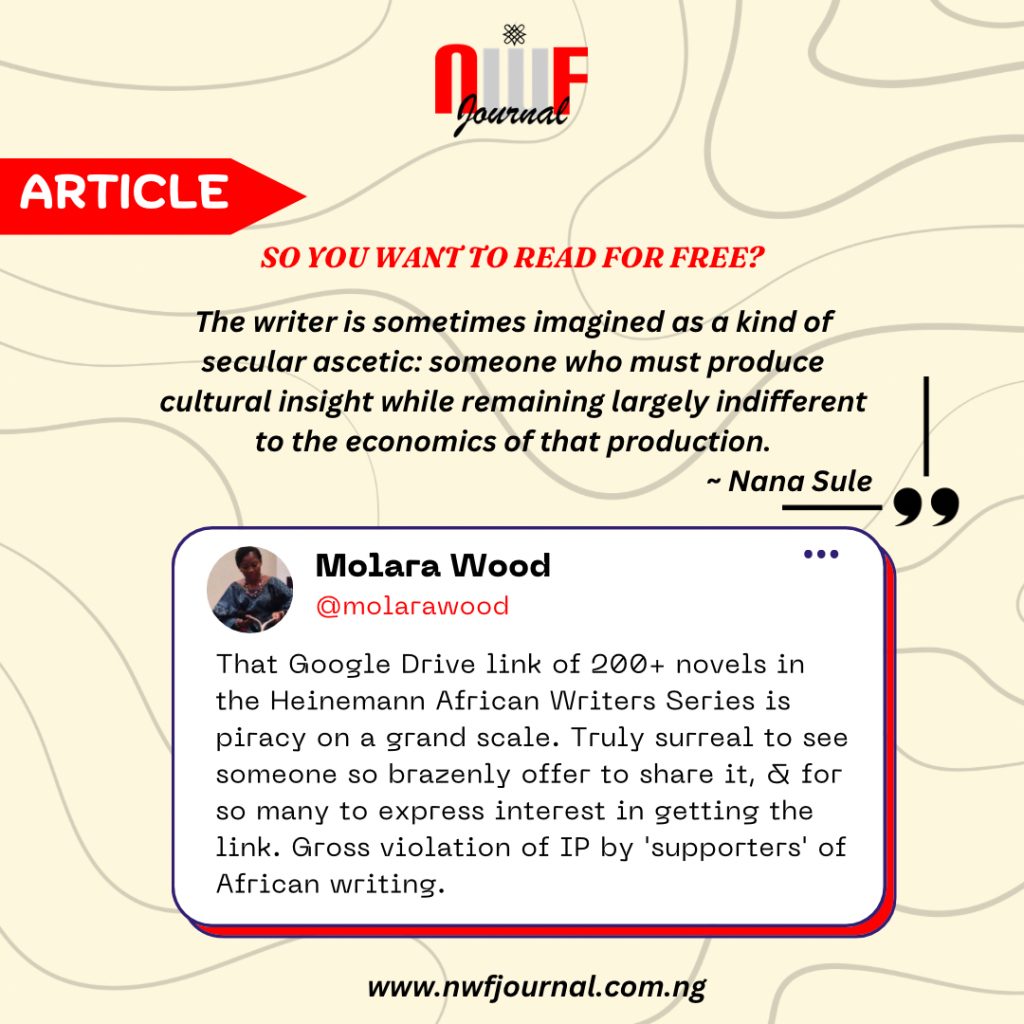
So You Want to Read for Free?
Mar 22, 2026


Literary journal of the Northern Writers Forum.






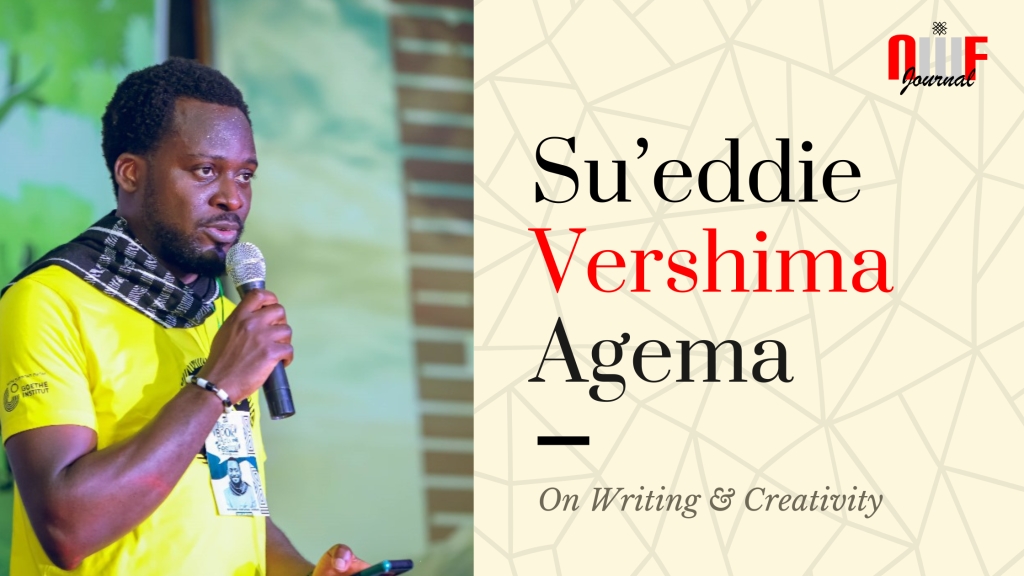
Su’eddie Vershima Agema is what happens when you give homesickness a voice and teach it to sing. A poet of many passports—memory, longing, laughter—he writes like someone who has learned the secret: that exile and belonging are two sides of the same shimmering coin. With collections like Memory and the Call of Waters and a heart stubbornly stitched to Nigeria’s rivers and roads, Su’eddie’s work reminds us that to write is to come home, and to read him is to remember that home has never been just a place—it’s a song.
Su’eddie Vershima Agema is a writer who moves effortlessly across genres, from poetry to short stories to children’s tales. His acclaimed collections include Memory and the Call of Waters (shortlisted for the 2022 NLNG Prize for Literature), Home Equals Holes: Tale of an Exile, and Bring Our Casket Home: Tales One Shouldn’t Tell. He is also the author of The Bottom of Another Tale and Once Upon a Village Tale, a beloved children’s book.
Beyond the page, Su’eddie is a literary organizer, editor, and cultural advocate, committed to nurturing storytelling through platforms like SEVHAGE Literary and Development Initiative and the Benue Book and Arts Festival.
Welcome, Su’eddie! Honestly, it’s such an honor to have you here. You’re someone who hardly needs an introduction, so we’ll happily skip the formalities and get straight to the juicy bit—your works, your words, and the magic you weave.
In your works, there’s a palpable sense of exile and longing. Do you view poetry as a form of personal repatriation, or does it deepen the exile by immortalizing it in verse?
That’s a deeply thoughtful question. I suppose the answer lies somewhere in between, depending on the day and the poem. Poetry, for me, is both a return and a departure. It’s like water – which, incidentally, is a recurring metaphor in Memory and the Call of Waters. Water carries memories, grief, joy, and displacement. It connects places, yet also separates them.
When I write, particularly about loss, migration, or those subtle aches that come from being in-between—between places, between countries, between identities, between emotional states—I am trying to locate myself. So, yes, in that way, poetry can be repatriation, a way of anchoring the self in memory, in language, in the possibility of being understood. It’s a form of coming home, albeit in verse.
But here’s the thing, writing also carves the absence deeper. When you pin a moment of longing to the page, you immortalise it. It lives, over and over. A sort of beautiful burden. Like how in Home Equals Holes, I tried to explore exile as both a physical and psychological landscape. Or in Bring Our Casket Home and Memory and the Call of Waters, where personal and communal grief is both mine and beyond me.
So, poetry doesn’t quite resolve the exile. But maybe that’s not the point. Maybe it gives the exile a voice, gives us a voice, gives grace, and occasionally, when the lines land just right, gives wings.

Your titles often evoke imagery beyond the immediate, such as Home Equals Holes and Bring Our Casket Home. How do you decide when a title should obscure meaning versus when it should offer clarity?
Titles, for me, are a kind of heartbeat for the work, intricate threads woven into the very spirit of the book. I tend to view them as thresholds: an invitation into the soul of the work, or sometimes a mirror held up to the reader, asking them to bring their own meanings along. Whether they’re clear or obscure really depends on what the work demands and the emotional journey it seeks to take the reader on.
Take Bring Our Casket Home: Tales One Shouldn’t Tell. That title and the book itself came out of grief. I wrote much of that collection in the aftermath of losing my foster father, Mr Charles Ayede, in 2011, a man who helped shape so much of who I am. The pain of his sudden death and that of a few other people created a vacuum that poetry helped fill to an extent. The title poem, Bring Our Casket Home, was born first, but the full title of the collection didn’t come until a while later. I remember reading some of the poems at Artmosphere, an incredible literary event in Ibadan hosted by my friend and brother, Servio Gbadamosi and his erstwhile partner, Femi Morgan. After my reading, Professor Hyginus Ekwuazi, one of my dearest literary model and beloved friend, suggested the final title. It resonated. It felt right. But the title needed more so that it would encapsulate loss, memory, and the things we bury deep inside but feel compelled to speak anyway—those ‘tales one shouldn’t tell’. Incidentally, Tales One Shouldn’t Tell is also a poem in the collection, but the book itself isn’t tied to any one poem—it carries the spirit of both.
That’s how I tend to approach titles. They aren’t random. They run like a thread through every poem, whether in tone, theme, or subtle echoes. You might not always see the words repeated, but their essence weaves through the entire collection. The title is, in a way, the first and last poem of the book. It’s something I want ringing in the reader’s head even after the final page.
Now, with Home Equals Holes: Tale of an Exile, I was leaning into something more existential. That collection explores exile, yes, but not just the physical kind. It’s about that deeper sense of displacement we all experience just by being alive. I see our human experience as a sort of exile: we’re here, making homes, digging memories into the earth, but also constantly aware, if only subconsciously, that we’re passing through. The holes we try to fill with love, community, longing… all of it is us trying to make sense of a world that we’ll eventually leave. And in the end, we return to yet another hole which is the grave, don’t we? Whether you see that final resting place as an end or a door to somewhere else, it’s still a hole—one that might, ironically, take us home.
So yes, sometimes the titles are clear, and other times they hold a bit of mystery—but they’re never just decorative. Even when they are obscure, they point to something. I trust the reader to enter with their own questions and find meaning that speaks to them. And above all, I want the title to hum quietly through the entire book, like a refrain in the background. Whether it whispers or shouts, it should always feel intentional. It should always belong.
Your poetry has been described as deeply emotional, “using emotions as the canvas for your tales”. If your work were to be translated into a visual art form, what style would you envision it to be and why? Do you believe this ’emotional canvas’ would translate effectively into a visual medium?
I rarely plan for my writing to be visual, but once the words begin to come, the images often arrive with them. If my work were ever to be fully translated into visual art, I imagine it would exist somewhere between expressionism and abstract realism. I’m drawn to the kind of art that doesn’t try too hard to be neat. My poems tend to hold a lot of emotion—grief, longing, exile, faith, motherhood—and those feelings are rarely tidy. So I imagine a visual style that layers colour and texture much like how I layer memory and feeling in verse.
Take the poem, ‘Memory’s Hold on Mother’s Day,’ for example. That poem carries warmth, devotion, exhaustion, and resilience all at once. If you translate that into a painting, it might be a woman cloaked in greys and soft golds, running through shadow, her child clinging to her back, with only love fuelling her legs. Or even something more abstract—blurred silhouettes beneath a sky that doesn’t quite end, the suggestion of a worn path, and a hush that speaks volumes.
Then you look at The Vanity of the Scholar’s Dream, and the tone shifts. The fog, the spiritual distance, the haunting image of the sea whispering to a lonely student in Brighton—it would likely be rendered in deep blues, jagged lines, and subdued light. Somewhere on the canvas, the River Benue would shimmer faintly, carrying a mother’s voice across borders and into the mind of a fading soul. That’s the world I write from.
I do believe that this emotional canvas translates well into visual art because both forms share the same core: the need to evoke. You don’t always have to understand a poem, or a painting, for it to move you. Sometimes all it takes is a single colour, or one line, to open something up inside you. That, to me, is where the magic lives.
And interestingly, in my next poetry project, I’m actually working on incorporating visual art into the book itself through a collaboration with the poet-illustrator, Jola Praise Ademola. The idea is to let the images sit alongside the poems, not just as illustrations, but as part of the dialogue. Two forms speaking into each other. I am also experimenting on writing poems that are somewhat different from my traditional style.
OH!! I definitely can’t wait for that! And that is for poetry. But how do you navigate the transition between the multiple genres you have written—poetry, short stories, and children’s literature, and which is your favorite genre?
Poetry, for instance, is my most intimate space—it’s where I’m most vulnerable. It’s the genre that has brought me the most recognition, and probably the one where I feel closest to the raw edge of my emotions and thoughts. That’s where my silences, my questions, and even my griefs go to find voice.
Ah, the genre shuffle! Honestly, it’s not as calculated as it might seem. I like to think that the story or feeling usually chooses its own form. Some thoughts demand the tight intensity of a poem, others stretch themselves out into short stories, and some arrive wrapped in wonder, playfulness, or innocence, which naturally lean into children’s writing.
Navigating the transitions is more instinctive than methodical. I don’t compartmentalize my writer self. I’m a different person in each genre, but they all reflect parts of me. Poetry, for instance, is my most intimate space—it’s where I’m most vulnerable. It’s the genre that has brought me the most recognition, and probably the one where I feel closest to the raw edge of my emotions and thoughts. That’s where my silences, my questions, and even my griefs go to find voice. It’s no surprise then that I’ve published more collections in that space, and most of the awards I’ve been blessed with have come through it.
That said, I do love short stories. There’s a freedom in prose that lets you explore in ways poetry often doesn’t allow. Then there’s children’s literature, which is close to my heart these days because I’m actively parenting. Reading to and with my children has reawakened the child in me. It’s also a powerful space—children’s books have the ability to shape minds, foster empathy, and build imagination. That’s a kind of power I don’t take lightly.
If you asked me to pick a favourite, I’d probably hesitate. Right now, poetry feels like home—the quiet corner I return to. But depending on the season of life, I’ve found sanctuary in all three. Each one teaches me something new about language, about people, and about myself. So I guess I just keep walking through the genres as they call.
Your book Memory and the Call of Waters was shortlisted for the NLNG Prize for Literature in 2022. How did that recognition shape your journey as a writer?
I remember when the longlist came out—I was thrilled but also very grounded. The shortlist, though, felt like a warm nod from the universe, like: “We see you.” But to be honest, while the recognition was affirming, it didn’t change the core of my writing journey. What it did was amplify it. It gave the work—and by extension, me—a bit more visibility. People who hadn’t previously read my poetry picked up the book. Conversations started happening in places I hadn’t imagined. It opened doors, yes, but more than that, it created a sort of responsibility. Because now, more people were listening, and I had to be more deliberate, more committed.
The funny thing is that I wrote Memory and the Call of Waters quietly over several years, piecing together poems from different seasons of my life—some spontaneous, some deeply meditated, others born of travel, heartbreak, joy, and all those in-between spaces. The collection carries themes of displacement, hope, family, faith, and grief, all washed through the metaphor of water—because water, like memory, moves, shapes, erodes, and renews. To see it recognised on a continental stage like that felt both humbling and validating.
But what touched me even more than the prize itself was the experience of sharing that moment with my friends, people I had come through a lot with. The longlist featured an exceptional list of past collaborators and friends, which made it more of a reunion than anything else.
Then there was the shortlist with my brothers, Romeo Oriogun and Saddiq Dzukogi. We had an arrangement even before the winner was announced to support one another, regardless of the outcome, and give a percentage of the trophy to the others who didn’t win. That spirit of brotherhood meant a lot. It reminded me that the true prize isn’t just the money or the trophy but the tribe, the journey, the stories, and the grace of still being here, telling them.
So yes, the NLNG recognition gave my writing more light, but it also reminded me to stay grounded. It’s lovely to be celebrated, but at the end of the day, the work continues. The poems still need writing, the stories still need telling. The real reward is knowing that someone, somewhere, reads your work and finds a piece of themselves in it.
Again, you were listed among the 100 Most Influential Nigerian Writers Under 40 and the Top 50 Contemporary Poets Who Rocked Nigeria, among several other awards. What do these recognitions mean to you personally and professionally?
It is always an honour, and always quite humbling, to be recognised in such ways, especially when you know how many incredible voices are out there doing brilliant work. More often than not, when such things happen, I have those quiet moments where you smile, breathe, and say thank You. But you also go back to your desk because the work doesn’t stop. Professionally, these recognitions have helped shine a bit more light on what I do—not just as a writer, but also as an editor, literary organiser, and cultural worker. So yes, it affirms that we’re doing something right, and it encourages others to support or engage with our initiatives.
That said, I try not to let awards or lists define me. They’re great, but they aren’t the compass. For me, what truly matters is the impact—those quiet messages from readers who say a poem spoke to them, or those moments when a book event lifts someone out of a dark place. That’s the real gold. The rest, beautiful as it is, is a bonus. And eh, I wouldn’t mind more of those bonuses! #Laughs. Overall, I think the summary is; while I’m grateful for every recognition, I see them more as a nudge to keep going, to stay rooted, keep learning, and keep building. Because in the end, legacy isn’t just what is awarded, it’s what endures in the lives we touch.
My Nigerian identity—my roots, language, culture, community—those are the starting points. Whether I’m writing about family, the River Benue, folktales, the daily hustle, or even grief, it’s more often filtered through the lens of where I come from.
Your work demonstrates a strong connection to your Nigerian roots. How has your global exposure influenced your writing and literary activism? Do you ever feel a tension between honoring ancestral narratives and the urge to break new literary ground?
There are tensions but how strong they are, or if they are at odds with each other, is something I am not sure about. There’s definitely a strong pull to home in everything I do. My Nigerian identity—my roots, language, culture, community—those are the starting points. Whether I’m writing about family, the River Benue, folktales, the daily hustle, or even grief, it’s more often filtered through the lens of where I come from. That grounding is important to me because it gives soul to the work. It’s my compass. I am currently experimenting with some abstraction and situating the self in the present fully.
But stepping out into the world—living, learning, and writing in places like Brighton, Oxford, Nottingham, or elsewhere—has added new dimensions. It’s helped me see our stories in global contexts, and it’s also shown me just how under-told and under-celebrated our narratives can be. That, in itself, fuels my activism. Because I’ve seen firsthand how African voices can sometimes be reduced to footnotes—or expected to perform a particular type of story. And I’m not here to perform in that sense. I’m here to tell the truth, to create, and to build platforms for others to do the same.
So yes, there’s sometimes a tension between holding onto ancestral narratives—those oral traditions, folklore, the deeply communal way we tell stories—and the need to push boundaries, experiment with form, and explore new modes of expression. But I don’t think the two have to be at odds. In fact, I think some of the most powerful art is born from that creative friction.
In Memory and the Call of Waters, for instance, you’ll find spiritual and cultural imagery sitting side by side with poems influenced by migration, academic pressure, or mental health struggles abroad. A poem like ‘The Vanity of the Scholar’s Dream’ is set in Brighton but deeply rooted in the language and cadence of home. You hear the mother’s prayer from across the Benue even as the sea whispers from a foreign shore. That’s the world I wrote from, a sort of cultural crossroads.
And the same applies to my literary work outside of writing, whether it’s with SEVHAGE, the Benue Book and Arts Festival, or editorial roles with Konya Shamsrumi and others. I’m always asking: how do we honour what came before us, while also making space for new stories, new storytellers, and new ways of seeing?
It’s not always easy, but it’s exciting. I want to write, and support writing, that is proud of its ancestry but unafraid to chart new paths. Because at the end of the day, we are not only keepers of memory, we’re also creators of the future.
On voices and style, how important is it for writers to find their own voice and style? If you could give your muse a color what would it be?
Finding your voice is everything. It’s like finding your own rhythm in a world full of noise. Early on, it’s tempting to echo the writers you admire—Adichie, Soyinka, Osundare, Ekwuazi, Tsenongu, Achebe, Nana Sule, or as became prevalent with many younger writers, Romeo Oriogun or anyone of the like… We all do it. And that’s fine; imitation is part of learning. But eventually, you realise that your voice isn’t something you go out looking for. It’s what’s left when you’ve written enough, lived enough, and let all the noise fall away.
Your voice is the thread that ties all your work together, whether you’re writing poems about grief, stories about childhood, or essays on development. It’s in the way you see the world, the metaphors you return to, the silences you allow on the page. It’s what makes someone read a line and say, “Ah, this sounds like Su’eddie.” That’s powerful. Because trends will shift, forms will evolve, but a true voice, a true voice is what stays.
As for my muse’s colour… hmmm, not sure what it’d be but for this moment, let’s say indigo. It’s layered, quiet, and deep. Like memory. Like prayer. Like the space between the known and the unsaid where most of my writing lives. On another day, it would simply just be the colour of silence, peaceful silence. The kind of colour that doesn’t shout but stays with you long after you’ve looked away. Whatever hue that is, I guess that is what my muse wears.
Nice! Haha… Looking back at your works, is there a poem or story you regret writing—or one you feel escaped you because the time or the world wasn’t ready for it?
Hmmm, I am sure that if I think deeply enough, I will probably remember a few but none readily comes to mind at the moment.
That is quite interesting! Finally, how do you negotiate the tension between the writer as a witness to societal struggles and the writer as a participant in shaping change? Can one truly be both without compromise?
As a writer, especially in our clime, there is the expectation for you to observe, to document, to bear witness with clarity and some detachment. But one doesn’t always have the luxury of distance. The fire you write about might just be burning your own roof. And when that happens, silence feels like betrayal. So yes, I believe the writer can be both witness and participant, but it’s not without its challenges.
I’ve always seen writing as more than just an art. You know, it’s a kind of ministry. A responsibility. You might not see me on social media or in the papers talking but I am doing a lot of work in the system and out of it to bring in what change I can. It’s not enough for me to write beautiful lines about broken systems if I’m not also in some way involved in mending them, even if just in my small corner. That’s where my development work comes in, the work I do with several organisations, and have done through the years in areas of gender, conflict management, environment, good governance, water sanitation hygiene and much more. That’s where my literary activism with SEVHAGE, the festivals, the prizes, and the community projects come in. I don’t just want to speak truth to power, I want to create spaces where others can find their voices too.
Of course, the risk is burnout. Or spreading yourself too thin. And it does happen to me a lot, especially as I get older. Sometimes, you wonder: Am I doing enough on the page? Or am I doing too much off it? But I’ve come to accept that the balance won’t always be perfect. And that’s okay. I am learning to live with what I can, and then let go of what I can’t, while delegating more.
In the end, I think the answer would be: no, I don’t think it’s about choosing between witness and participant. It’s about finding your rhythm between the two. Knowing when to speak from the shadows and when to step into the fire. There may be compromises, yes, but not of purpose. Not of soul. Because in the end, words can stir hearts, but action moves feet. And maybe the real magic is when both happen together.