

So You Want to Read for Free?
Mar 22, 2026


Literary journal of the Northern Writers Forum.





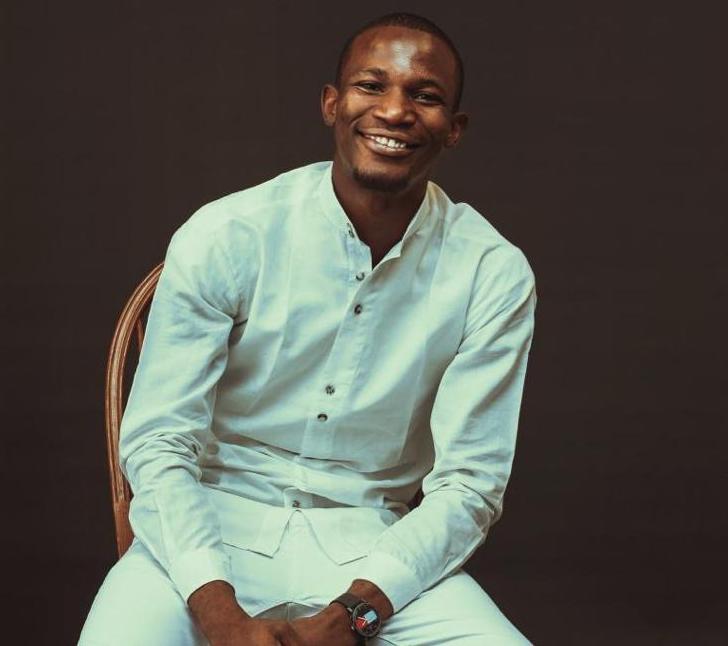
To the esteemed participants of the Northern Writers Forum, I would like to provide you with a concise overview of the insightful Q&A session we conducted last week featuring our distinguished guest author, Flourish Joshua:
Zakiyyah: Good evening, members. It’s time!
I will moderate today’s activity, and no one can interact or distract the session; I’ll ask Flourish Joshua questions. At the end of the Q&A, you’ll ask him questions personally. Please welcome Flourish Joshua.
Good evening FJ, and welcome!
Thank you for accepting this invitation. We are super honoured to have you in our space. Our members are so excited to learn and hear from you.
I have ten questions for you today; I hope you are as excited.
Flourish: Good evening, Zakiyyah. Thank you for having me. I’m honoured. Thanks to the
fantastic team as well.
Yes, I’m ready for your questions.
Zakiyyah: It’s our pleasure!
Alright, let’s dig in💃🏼
I’ve watched so many of your spoken word videos, and one thing I’ve noticed about your poetry is that your works majorly centre on faith and spirituality. How does your faith influence the themes and messages you explore in your poetry?
Flourish: First, thank you for taking the time to watch my work. Means a lot to me. I guess we all have our beliefs, such that all we do in our small life is shaped by it.
I have a lot to say about my faith that has already been said. So, one beautiful way to repeat it is through poetry.
One way to say what has already been said and probably known, such that it doesn’t sound cliché, stressed or overheard, is through good poetry.
So, basically. My faith is what fuels my poetry.
Zakiyyah: I agree.
For you, poetry serves as a medium for spiritual enlightenment and transformation. How have you witnessed this in your journey?
Flourish: There is a lot I probably would have remained ignorant of if my hands didn’t find spoken words poetry or if I weren’t diligent in it.
“As we begin to walk on the way, the way appears.” Rumi says.
Trust me. As enlightening as my poetry could be to my audience, it is to me. I am happy I am the first beneficiary of the blessings of my lines.
If it has blessed you, I caught the blessings before you did. Trust me, lol.
If you are shocked, I am appalled as you are. More shocked, even.
So, more than I want to enlighten my audience, I go to the page each time I want to write spoken words with a mind that wants to learn something new.
Zakiyyah: Poetry is beautiful in many ways; poetry is undoubtedly multi-directionally therapeutic.
Flourish: Like a child seeking knowledge. I often do not know what to say when I approach my page to write spoken words. In the place of digging, I find what my audience will encounter.
You dig.
Zakiyyah: This is important for young and aspiring writers to understand and note.
💯
Unto the next question. What role do you believe art, specifically poetry, plays in promoting social change and addressing societal issues?
Flourish: An excellent role. Art is life. Life is art. Poetry is life. Life is poetic. Life and poetry are somewhat interwoven. To exempt poetry from life would mean to terminate existence.
Permit me to quote from one of the oldest books (if not the oldest).
_“In the beginning God created the heaven and the earth. And the earth was without form, and void; and darkness was upon the face of the deep. And the Spirit of God moved upon the face of the waters. And God said, Let there be light: and there was light.”_ Genesis 1:1-3 KJV
What else is more poetic than the above passage?
Zakiyyah: This is getting interesting 😁
I absolutely love your responses.
Going deep into spirituality and art, how do you navigate the fine line between artistry and spirituality in your creative process?
Flourish: One:
_”In the beginning, God CREATED the heavens and the earth.”_ Gen. 1:1
From the above passage, it is only ideal to keep a good proximity with the greatest Creative of all time.
Two:
“and to rule over the day and over the night, and to divide the light from the darkness: AND GOD SAW THAT IT WAS GOOD.” Genesis 1:18 KJV
From the latter part of the above passage, *IT WOULD BE A CRIME TO FOLLOW THE GREATEST CREATIVE OF ALL TIME AND CREATE ART THAT IS NOT GOOD.*
To drive home your question: navigating the fine line between artistry and spirituality is to know that there is an Almighty Creator whose creation was good, so if you must follow Him, you have to be good. You must strive for mastery of the art.
Zakiyyah: Wow. Wow!
Your approach to my questions is unique. I’m more excited now.
How important is it for poets to actively engage with the literary community and collaborate with other artists?
Flourish: Forgive me if I take you to the Bible too much. That’s the source of my art.
“For we dare not make ourselves of the number, or compare ourselves with some that commend themselves: but they measuring themselves by themselves, and comparing themselves among themselves, are not wise.”_ 2 Corinthians 10:12 KJV
We should collaborate, not compete. Not compare ourselves with ourselves. It is not a question of who is good or who isn’t. It is a question of how much impact we are making with what our hands have found.
Hence, collaboration is good. It is indeed necessary.
Deuteronomy 32:30 says _“one man will chase a thousand and two put ten thousand to flight.” There is so much we can do when we collaborate with the art.
It sensitises the community.
Zakiyyah: Hundred per cent true!
How do you differentiate between the field of poetry and spoken words? Tell us what makes them different and which you find yourself in, often.
Flourish: Well, there is a difference. I’d not dwell so much on this.
You can do poetry without doing spoken words, but if you must do spoken words, you have to be poetic.
I actively function in both territories.
Zakiyyah: So, this means there is the existence of spoken words because of poetry, logical.
What are your thoughts on the evolving landscape of poetry in the digital age and the rise of spoken word performances?
Flourish: I guess there is time for everything, as Ecclesiastes 1:1 says.
Spoken words should enjoy themselves while their time lasts, lol.
Zakiyyah: Haha, I wish there was more to your response to this question, but it’s fine.
How do you ensure your poetry cuts through and resonates with your audience in a world filled with noise and distractions?
Flourish: Solitude is the word.
To process my thoughts properly, I wait till the world is quiet.
While it is noisy, I look out for what the world is saying. While quiet, I look out for what it isn’t saying.
Zakiyyah: You’re the president of The Frontiers Collective. How has your involvement in the Frontiers Collective and other poetry collectives influenced your creative journey?
Flourish: As a collective member, it has helped me be a better page poet.
As a collective leader, it has helped me approach my words with extreme caution.
Zakiyyah: To my last question: As a poet, what do you hope your legacy will be, and what mark do you want to leave on the world through your words?
Flourish: This has to be one of the most challenging questions ever. 🤔
I will not even deceive you or try to cook up a legacy quickly. I do not think I have taken my time to draw the mark I want to leave on the world through my words, but all I’d say is this. Permit me to quote Jesus in John 3:8.
“The wind bloweth where it listeth, and thou hearest the sound thereof, but canst not tell whence it cometh, and whither it goeth: so is every one that is born of the Spirit.” John 3:8 KJV
As long as I breathe, it is spoken words till I die. As Paul says, I press on!! I do as the Spirit leads, leaving God to decide the mark my diligence will leave on the world through the words He speaks through me.
Zakiyyah: Amen! Amen!
Thank you so much for your time. We enjoyed today’s session. We’ve all heard and learned from you. To wrap this up, please give a piece of advice to a common NWF member.
Flourish: Diligence pays.
Zakiyyah: Short but powerful.
Thank you once again. Contributions and questions can come in from the members.
Member: How can poetry serve as an instrument of passing information to society while not everyone understands it (poetry)?
The language used in poetry is primarily understood by the people, mainly by writing or reading it.
Flourish: You are the architect of your words, brother.
If you want to talk to me, you know how to speak in a language I will understand, right? That applies to poetry.
People do not understand poetry because poetry is often not written in the people’s language.
If you want people to understand your poem, bring them into the poem. Write for them, not for yourself. They are the consumers of your art, after all.
Zakiyyah: Without questions, we’ve come to the end of today’s session. Thank you, FJ. We appreciate you.
We will invite Isaiah Adepoju, another talented writer, for this week’s author Q&A session. Looking forward to an interactive session.