

So You Want to Read for Free?
Mar 22, 2026


Literary journal of the Northern Writers Forum.





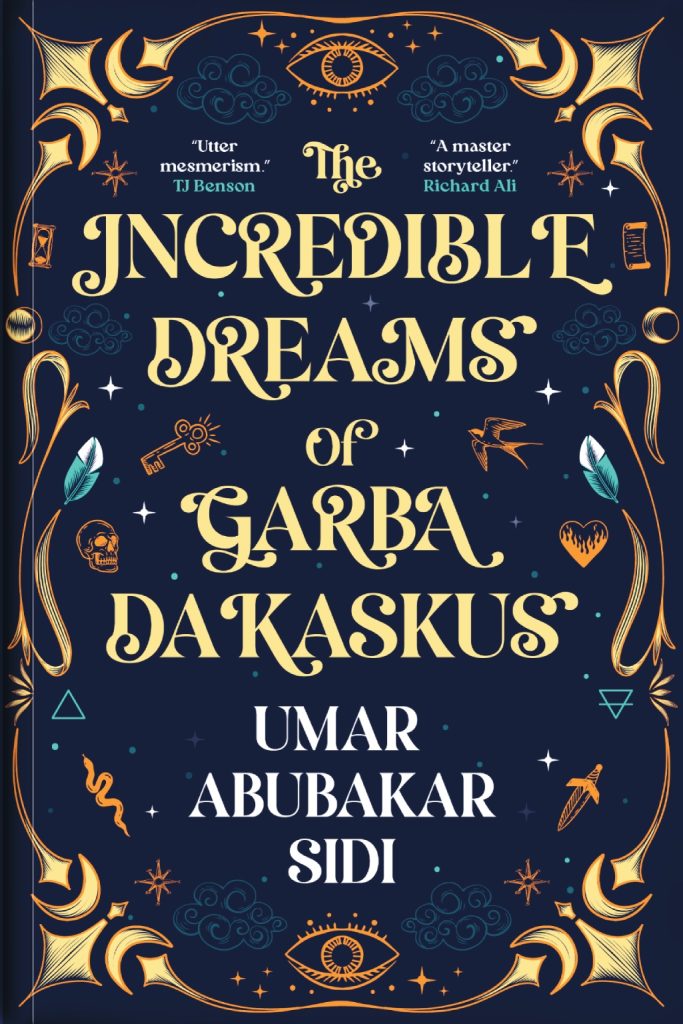
There is a lot to be said about Umar Abubakar Sidi’s The Incredible Dreams of Garba Dakaskus (TIDGD), and a lot has indeed been said. Beyond the experimental nature of the book, the utter mesmerism of its structure, there are other things to marvel at. For instance, the concept of a cabinet of curiosities, which for most writers, would be familiar. If you are a writer, imagine a space where all the characters you’ve ever conceived, all the ideas you’ve ever had, go to hang out. Sidi was crazy to find a name for the part of our heads where stories go to haunt us. And such a curious name too! I loved it.
Like all good books, TIDGD is more than a story. It is an invitation to sit with the self and the environment, to critically engage with the past and the present and to think of the actions we can take, the questions we can ask to lay the foundations of the future we hope to create. As I sat with TIDGD, one particular issue kept sneaking into my mind, forcing me to bring it to the fore, and now, share with you.
But let’s start from the basics, shall we? What is it people like to say at the beginning of tales?
Aha!
Once upon a time.
Between the 8th and 13th centuries, there was a period known as the Golden Age of Islam. It was a time when Islam thrived intellectually, scientifically, and culturally. Think of the best scholars, academics, and scientists: this was when Muslims led in various fields. The Al Quaraouiyine, considered the first university in the world, was founded during this era. Developments in astronomy, algebra, forceps, and scalpels all happened at this time. Leaders were focused on elevating education and progress.
This is the period in which TIDGD is set. For those who have read the book, you can see why the author chose this era to tell tales of scholars, books, and the object of my fascination: the Letters.
“… Letters, or aspiring Letters—as the young students of the House of the Alphabet are called—had the strangest childhoods. Selected between the ages of four and five, they were taught to speak, write, and compose poetry in different languages. They went through the routine of memorizing arcane and ancient texts on logic, history, and algebra. By the age of seven, they began combat athletics, swordsmanship, and equitation. Later, medicine and medical procedures were added to their already bloated learning curriculum…”
In TIDGD, the House of Alphabets was created under the instruction of the ruler, the Caliph, and these Letters were later used by him to pursue an object of his own fascination. This immediately reminded me of a set of children made to leave their homes and ‘study’ under the guidance of a ‘scholar’: the al- muhajjirun, the almajirai.
I want to believe that when the concept of the almajiri system was first created, it was, to some degree, in the interest of the children. However, what we now have is hungry, unloved children living in some of the harshest conditions, unprepared for the rapid growth of the digital and technological world we live in.
Two observations struck me from this depiction in TIDGD and the reality it forced me to confront:
First, I strongly believe that schools (if what we have as the almajiri system can be classified as a school) are tools of control. At best, they cultivate the next crop of workers for the labor market; at worst, they serve the ruling class by controlling what we are taught and allowed to learn. Much like the Caliph sending the Letters to find the secret of the alphabet, the almajiri system now appears to be a structure designed to produce a dependent class, relying on the mercies of the bourgeoisie and serving as the class that guarantees votes and foot soldiers for violence and unrest.
A few days ago, the Minister of State for Education, Prof. Suwaiba Saidu, stated that almajirai should be considered educated and not counted among the estimated fifteen million out-of-school children in Nigeria. Watching her say this in an interview with Arise TV shocked me. I wanted to leap into the screen and ask, “Are these the same kids we see, with tattered clothes and dirty bowls in hand, lacking even basic knowledge of Islam, that you speak of?”
This leads me to my second point: perhaps if the bourgeoisie truly cares about education, we should think of genuinely revolutionizing the almajiri system—to actually teach these children marketable skills that would help them excel in today’s fast-changing digital world.
Unlike the Golden Age of Islam, I doubt that leaders in Northern Nigeria are willing to elevate education and honor scholarship in a holistic, all-encompassing way. I doubt they want these kids educated or enlightened. And perhaps, like the Caliph, they just want them as puppets, chasing after violence, poverty, and whatever else keeps them dependent on the manipulations of rulers.
The link between the almajirai and the Letters depicted in TIDGD is quite clear. In both cases, children are taken from their homes and molded for purposes beyond their comprehension. The Letters, despite their rigorous education, ultimately served the Caliph’s ambition, not their own. Similarly, the almajirai, stripped of a holistic education, are often left to serve societal structures that neither nurture their potential nor equip them for self-determination. The tragedy lies in the fact that both groups could have been so much more if only they were allowed to dream beyond the confines of their imposed realities. At the peak of their lives, they are left like Ba (apologies if you haven’t read this yet) —meek, speechless, devoid of true motivation, and unable to dream or think for themselves.