

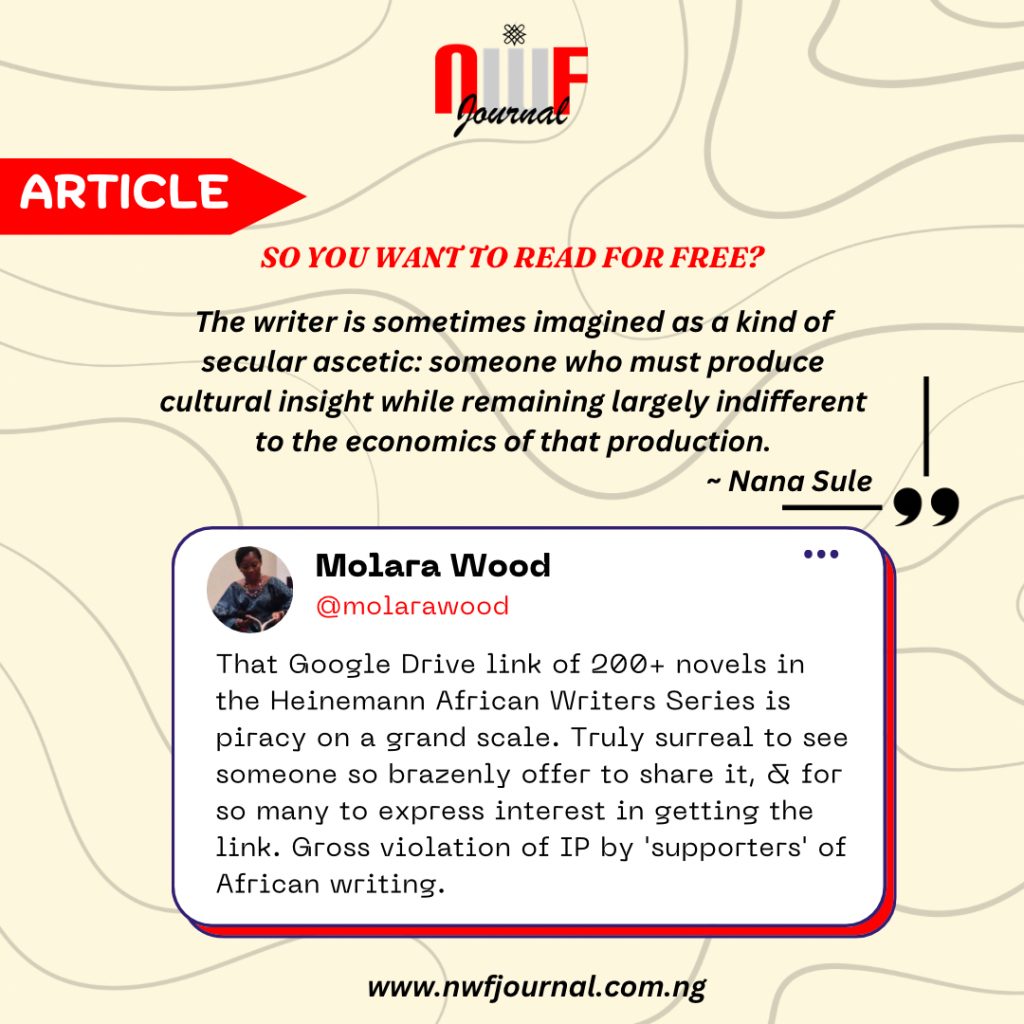
So You Want to Read for Free?
Mar 22, 2026


Literary journal of the Northern Writers Forum.







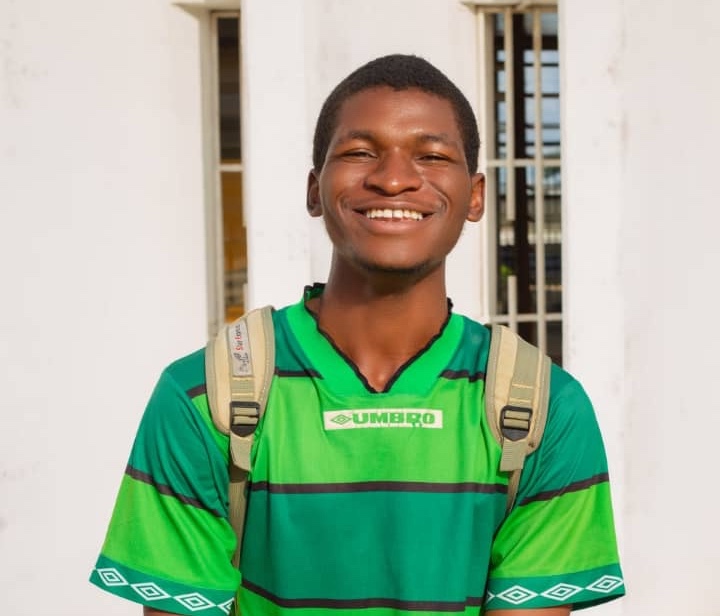
Zakiyyah: Good Evening, Adepoju and welcome!
Thank you for accepting this invitation. We are super honoured to have you in our space. Our members are so excited to learn and hear from you.
I have ten questions for you today; I hope you are as excited.
Adepoju: I am excited, Zakiyyah. I am happy to be here.
Zakiyyah: Great, let’s start then☺️
Adepoju: Okay, then.
Zakiyyah: You’re a great poet and prose writer from Nigeria. How do you blend well in these two genres? If you were to choose between these two, which would it be?
Adepoju: Erskine Caldwell. Said every novelist tries to be a poet. I’m not blending the genres so well. I’m failing as a poet. But that’s all fine: I found prose.
Zakiyyah: This means prose wins?🙂
Adepoju: Oh yes, lead poetry to the gallows!
Zakiyyah: How do you balance expressing your personal experiences and connecting with a broader audience through your works?
Adepoju: I’ll dodge this question slightly. I read Salvador Dali’s autobiography recently— Dali was a surrealist. And I liked what he said about his experiences being non-linear. My personal experiences are an old car, non-linear and rickety. My concern has never been to a broader audience. I merely try to understand how to make the car work. Sometimes I admire the steering, the old tires, and the greyness of it. How pleasurable it is, that car! I believe that a broader audience will identify with my work because, even if they don’t have the same wreck as me, they can at least admire it in passing.
Zakiyyah: Wow, this is interesting.
What impact do you hope to have on your audience through your literary works, and how do you measure that impact?
Adepoju: A minute of self-reflection. Or two minutes. Or an eternity of Measuring that impact may be challenging. Fortunately, I don’t need to.
When I write, I do so to learn, unlearn, and be impacted in a way. I only hope the audience is affected similarly. If they are, well, that’s fine. My job was finished at publication.
Zakiyyah: How do you handle criticism and feedback on your work? How does it shape your growth as a writer?
Adepoju: Criticism is so vital to the work and even to me. I am not afraid of going back to my work. I am not in haste to publish. I like spending time at work now. So, when the poem, or the story, gets hit back. I’ll dismantle them.
Zakiyyah, partly because of criticism, I started writing on paper. Laptops make unfinished work look good. On paper, I can draw plot points, character traits, and teeny-weeny details I may not have on the computer. That helps me with positive, even destructive, criticism.
Knowing that my role models, writers I want to be like, get hit critically, I realised I must be secure and not complacent.
Zakiyyah: Every successful writer today handles criticism carefully. Some writers have failed because they view criticism as people’s attempt to discourage them, so they become victims of that thought. Criticism should come as a motivation to do better.
How do you find inspiration in everyday life and translate it into poetic expression?
Adepoju: Yes, yes, yes. Critics do that work differently. Some invest in art, some police.
On inspiration, I am still determining how that works. With writing a novel, everything becomes an inspiration. I am constantly noting things down, however familiar. At the market, at home, in lecture rooms, and on the street. There’s something to note. There’s something to translate, too.
My Mum once sang in Yoruba, and I translated it into English, and it was so poetic I immediately put it into a story. I’m more interested in how languages work: Yoruba and English, especially their tonicity. That’s enough inspiration.
If the language is good, the need for inspiration almost disappears.
Zakiyyah: Inspiration is everywhere.
How do you overcome writer’s block and keep your creative momentum flowing? Do you even experience it to start with?
Adepoju: Last year was blank. I couldn’t write. I called it writer’s block. But the truth is I lost my fascination with writing. Of course, there are times the writer has not lived enough— which was my problem. So, I discovered new books, read them up, and entered the wrong relationships. All the while, I observed my friends and family, their actions and reactions. I compared them with characters. I’ve only been plotting and analysing my novel these past few months. I study novels, too: Faulkner, Joyce, Morrison, Nabokov, listening for sounds. That keeps my creative momentum flowing. I do not fret over a line— I dispose of it when I don’t feel it is working. If I ever get a novel contract again, I need to empathise with my publisher: papers are expensive; only the valuable lines need to make it in.
Zakiyyah: Writer’s block is just a new concept to give lazy writers excuses 😂
Adepoju: Hehehe. Not in the way you put it, but something along that line.
Zakiyyah: How do you approach the task of balancing your roles as a poet, writer, editor, and retired Nigerian effectively?😂
Adepoju: Mere multiple identities. In the same way, I can be a son, brother, student, ex-Nigerian, etcetera. Being a poet can be hectic sometimes. I easily lapse into perfectionism. When I read poems, I get carried away by the sound, the rhythm. I need to remember to study. I’m a student, for God’s sake. In that aspect, I wish to lag.
In other aspects you mentioned, I try not to stifle Isaiah, who writes prose.
Zakiyyah: Interesting answer.
Adepoju: I’m trying.
Zakiyyah: How do you maintain your passion and drive for poetry and prose, even when it may feel challenging or discouraging?
Adepoju: I live some more. It’s like hide and seek. I was down last semester. I couldn’t write. The coursework was heavy. There was also pressure on a drama course I failed the previous semester. So, to sustain my passion for prose and poetry, amidst the pressure, I walked with people who love poetry as I do and who can recite Edgar Allan Poes, George Herberts, T. S Elliot, etc., offhand. That way, I felt like a wife. Sooner or later, my husband would touch me. He did.
Zakiyyah: What role does vulnerability play in creating authentic and impactful poetry?
Adepoju: In what sense? The vulnerability, I mean.
Zakiyyah: What challenges come with writing good poetry?
Adepoju: One of the best ways to communicate is through language, style, etc. I cannot express these ways, but that is what I observed. But the challenges are general, in a way. I love a novel that makes me eavesdrop, and I’ll love a poem that gossips, but not in the market square.
Zakiyyah: 😂😂
Last question; What advice would you give aspiring poets struggling to find their unique voice and style?
Adepoju: Observe more than you write; write more than you pontificate on writing; and if you cannot do the work, Dominoes pay their workers well.
Zakiyyah: Thank you so much for your time; we enjoyed today’s session, looking forward to having you some other time.
Contributions and questions can come in from the members.
Adepoju: Thank you, Zakiyyah. 😊
Zakiyyah: Thank you for honouring this☺️
Without question, we’ve come to the end of today’s session. Thank you for your time, Adepoju.